
by Floyd Gray (Post On October 19, 2026 @ 12:26 p.m.0
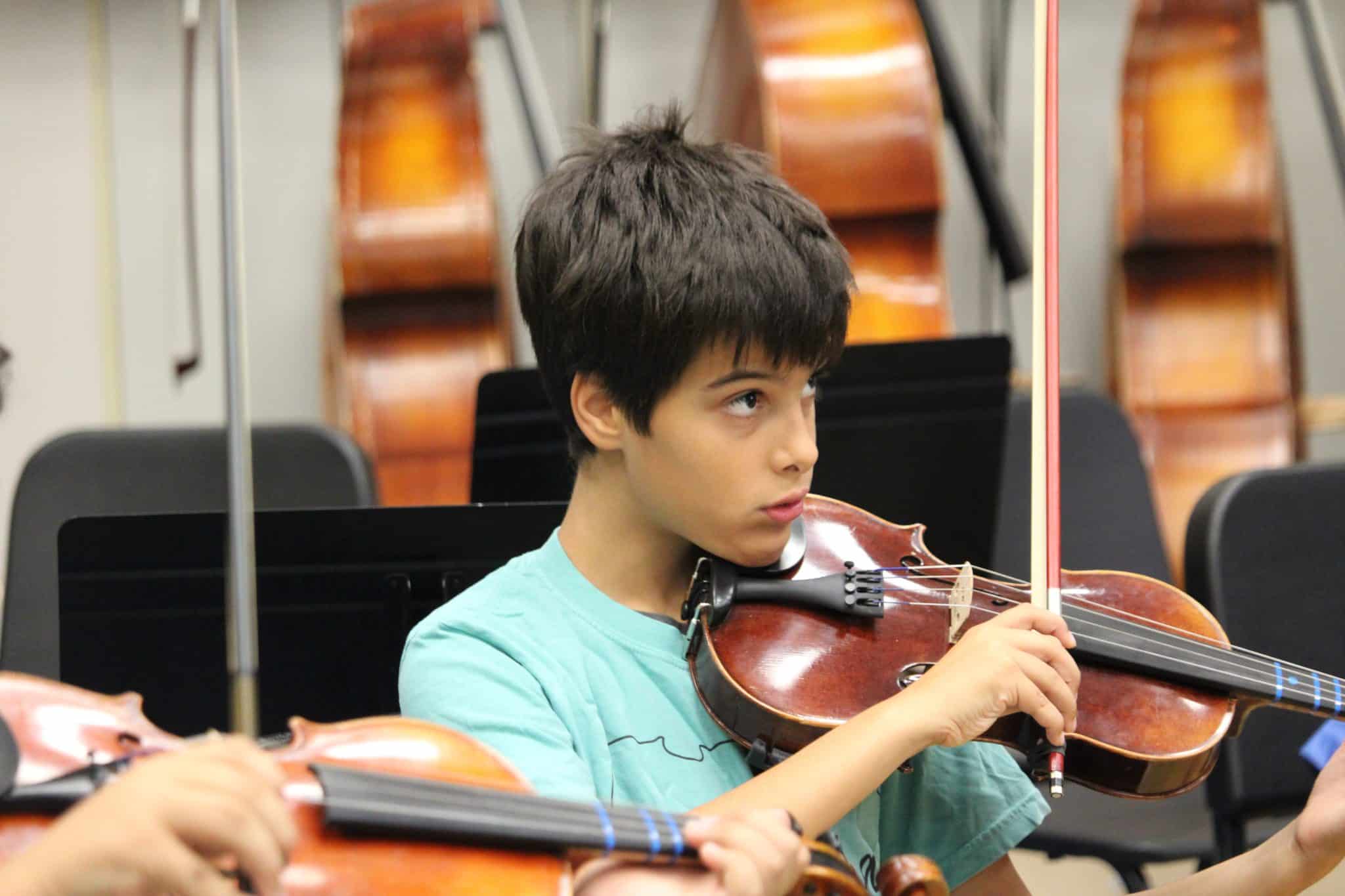
For the first time at Alamo Heights Junior School, 29 band students and many orchestra students combined into a full orchestra in mid-September. The collaboration—bringing together string musicians alongside members of the AHJS Honors Band and high school ensembles—was organized by Mr. Wolocki, Mr. Garcia, and Ms. Gil to transition students from a standard string-only environment into a full orchestra experience. It bridges the gap between the junior school and high school programs, celebrating a long-standing community legacy (over 50 years of strings education in Alamo Heights ISD) by allowing hundreds of students to experience the immense sound and community of playing together. The select group of top players from both programs rehearsed in the fine arts building, working to blend their different strengths and sounds.
Why Is This the First Time AHJS Has Done This?
Historically, middle and junior school orchestra programs focus primarily on foundational string-only ensembles (violin, viola, cello, and bass). Introducing wind, brass, and percussion instruments to form a full orchestra is highly complex for this age group. Logistics, scheduling alignments across different fine arts departments, and ensuring young wind and percussion players have the technical maturity to blend with strings have traditionally kept full orchestras reserved for high schools. However, under the leadership of directors Joemichael Garcia and Lani Gil, the AHJS program reached unprecedented, elite performance levels—recently culminating in the 2025–2026 Chamber Orchestra being named a National Winner in the Mark of Excellence project. This caliber of talent made it the perfect era to pioneer a full orchestra collaboration at the junior school level.
Sound Differences and Volume Challenges
One of the biggest differences Liam Pheiffer noticed was the volume of the two groups. The band was much louder than the orchestra’s strings, which sometimes made it difficult for band students to hear the orchestra while they were playing. Liam Pheiffer said, “The chamber orchestra was quieter because the band had a stronger sound.” Because of this, students had to listen carefully instead of only listening to their own section. Orchestra student Knox Emerson says, “It’s a little hard to focus with all the extra noise.”
Different Strengths Create a Unique Sound
The two groups also had different strengths. Some parts of the music were easier for the band to play, while other parts worked better for the orchestra. The band’s brass, woodwinds, and percussion created a strong sound, while the strings added a sound that the band normally does not have. Putting those sounds together created something different from what either group could make alone—like in “Engines of Resistance,” a high-octane instrumental piece that showcases their combined talents. While the band brings power and the orchestra offers a distinct tone, together they create a rich symphony.
Learning to Listen and Play Together
Playing together also meant that the musicians had to pay attention to each other. Liam Pheiffer said the tempo did not change very much because the band and orchestra generally played at about the same speed. Even though the tempo was similar, staying together still required concentration. The goal was not for one group to be better than the other. Instead, the musicians had to listen and play as one ensemble. Liam Pheiffer said that each group had advantages in different parts of the music, so students needed to pay attention to the other sections instead of focusing only on their own instruments. This helped the musicians understand how their individual parts fit into the entire performance.
Rehearsals and Preparation
Rehearsals were another important part of preparing for performances. Since the band and orchestra normally practiced separately, students had to get used to hearing instruments they were not normally around. Liam Pheiffer said, “If someone is preparing to play as a full orchestra for the first time, I would tell them to pay attention during sectionals and rehearsals and stay on task.” Sectionals are when all people who play the same instrument play together. Being prepared helped musicians know their parts and understand when they needed to listen to other sections. Liam explained that the band director, Mr. Wolocki, helps people improve their playing by listening to people individually to help get perfection.
A New Learning Experience
For Liam Pheiffer, this collaboration opened doors he never expected. Before this experience, he had never played with an orchestra, so stepping into the fine arts building for that first rehearsal meant entering unfamiliar musical territory. He discovered that orchestra players approached their craft differently than band members, which broadened his understanding of what it means to be a musician. The experience also revealed how much richer music becomes when different traditions come together. What made it especially memorable for Liam was knowing this was a first for Alamo Heights—he and his fellow musicians were creating history and paving the way for future collaborations between the two programs.
The Reward of Teamwork
Knox Emerson said, “Hearing the song be perfect for the first time makes it feel like your work paid off.” What began as two separate ensembles became one larger group, giving students a chance to experience a type of music that they would normally not get to do. For the students involved, this historic collaboration at Alamo Heights Junior School proved that great music comes from more than individual talent—it emerges when musicians open their ears to unfamiliar instruments, adapt to new playing styles, and trust each other to create something neither group could achieve alone.

Leave a Reply