
by Tate Shalley (posted on February 16, 2026 @ 12:39 p.m.)
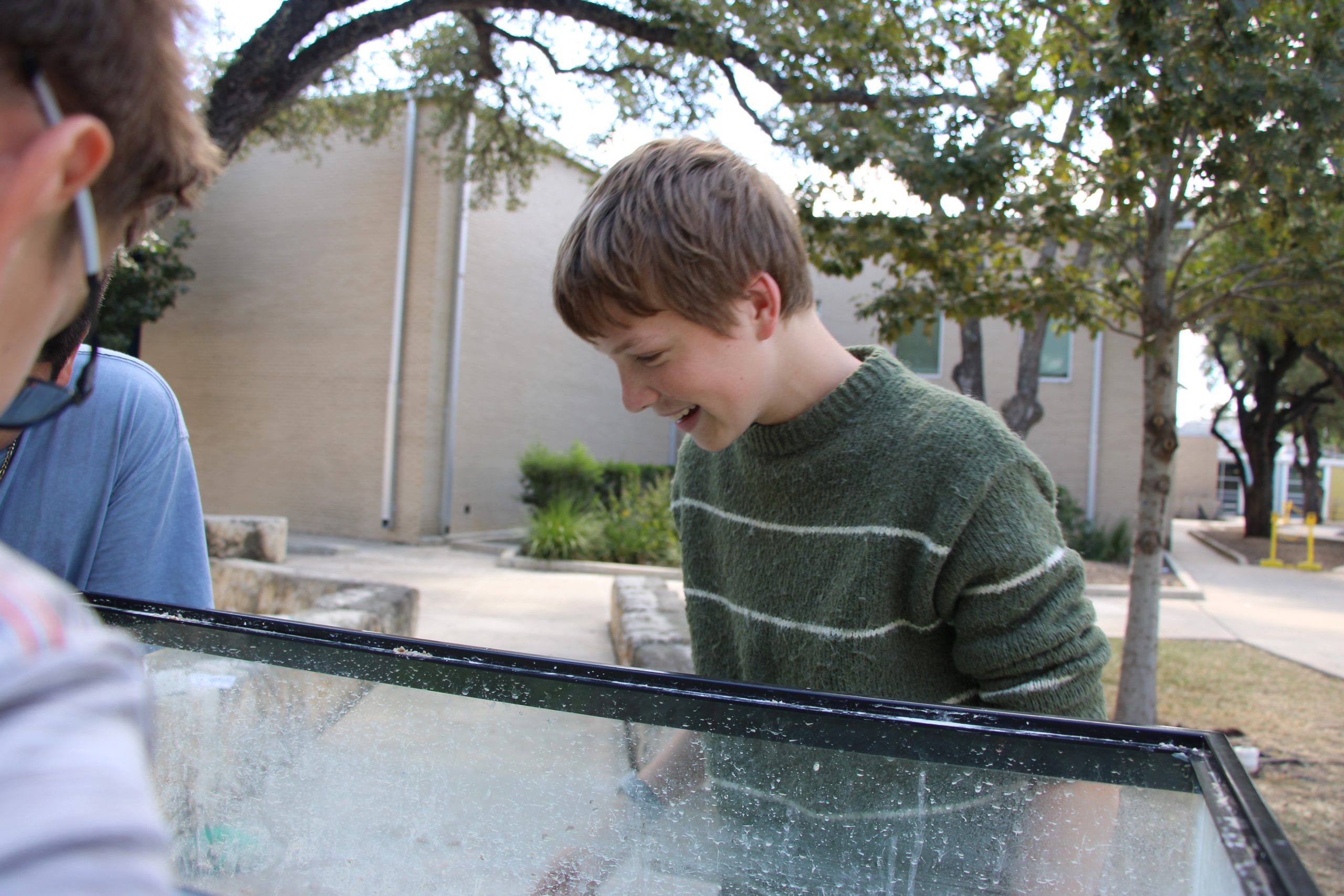
Here at the junior school, there are many great projects. Throughout the school, many projects are going on, from math to history, but today the focus is on what is happening in STEM. Ms. Maldonado said, “This is a project that Ms. Henry had done prior to me getting here. I don’t know if Ms. Henry thought of it or the teacher before me, and we have retrofitted it to fit new standards, so it has evolved. Last year I did vermicomposting, which was composting with worms, but this year I took that out. It changes year to year, with main ideas staying the same but different elements being added.” It is a great project for critical thinking.
This project also has a great purpose. Ms. Maldonado says, “The main purpose is that our world is changing. With farming that is done year after year on the same crops, you train your soil differently because we are inheriting it from past generations. We are asking, what are some ways you can grow that crop? That was kind of the idea behind the start of the project—either rehabbing the soil that we have or finding new ways to grow.” The project emphasizes the importance of taking care of the soil and protecting the world.
This project has been going on for some time. “It started with the research page on the half day, which was January 14, and it will continue regularly in class until late February. If the plants are successful, I have no problem keeping them because then you are just adding water and refilling tanks depending on the plant, the condition it is in, and the desire of the team to continue,” Ms. Maldonado explained. The project may continue as long as conditions allow.
When the project is finished, Ms. Maldonado says, “If no one wants them, then we try to rehome them to the garden outside the STEM building. It depends, or I sometimes take them home if it is something I can use and if there is not space. But if students want them, since it is their project—their blood, sweat, and tears—they have the ability to take them home.” There are many options in this process, and the plants may continue to grow in a new location.
The grading for this project may seem confusing, but Ms. Maldonado explains, “No, I will not grade them on the growth. I do not think that will be fair because you have factors that you can’t control. Maybe someone wanted to water their plant on Monday, but there was an ice day, or some plants grow slower than others. I don’t grade based on those things. I’m guilty of killing many houseplants myself, so I would never deduct points for that. What we are doing is testing quantities like the water or the pH levels, the nutrients in the water, and certain elements in the soil to then be able to grade them.” She will not grade them on growth because there are too many uncontrollable factors, and the goal is to make the grading as fair as possible.
These are just some of the projects at the junior school, and there are many more.



Leave a Reply