
by Reilly H. and Riley S.
At Alamo Heights Junior School, there are various electives, ranging from world languages to fine arts. These electives give students a reason to look forward to coming to school. “They want to come to school to do those things that really interest them,” states the principal, Dr. Guthrie.
Electives are important because they give students a chance to take a break from regular schoolwork. It is very hard to decide which elective is most important. “Where they really feel the strongest, wherever their heart is—that is the most important one of all,” said Dr. Guthrie. When students enjoy their elective class, they will want to be at school.
One of the most popular electives at Alamo Heights Junior School is the language program. There are French, Latin, and Spanish classes. “Being bilingual helps when you are traveling and in job situations as well,” states Julia Gerlein, an 8th-grade Spanish student at Alamo Heights Junior School. Being able to understand two languages is very difficult but very rewarding. Students in language electives are not just having fun learning the language—they are also learning about the origins and culture of that language. Students dedicate a lot of time to learning their chosen language, but they can still face challenges. “Speaking out loud in Spanish has always been a little tricky for me,” states Julia. There are always challenges people face while learning languages, but the students put forth effort to improve their second (or even third) language because they enjoy it.
In addition to languages, students also love theater, which has become one of the most loved electives for students. “I like theater because I like to be on stage, and I like to be able to perform in front of people,” said Kayleigh Gaughan, an 8th-grade theater student at Alamo Heights Junior School. Theater is an elective in which students can truly show their emotions on stage. It gives each student a chance to try something new and face their fears. There are some students who do not want to be on stage but still want to help with the production of a play—those students join tech theater. Tech theater is a great opportunity to “be on stage or offstage and still help people on stage,” said Kayleigh. In tech theater, students have the opportunity to make stage props or help with scene changes during the play. “I get to help people on the stage perform to the best of their abilities,” mentioned Kayleigh.
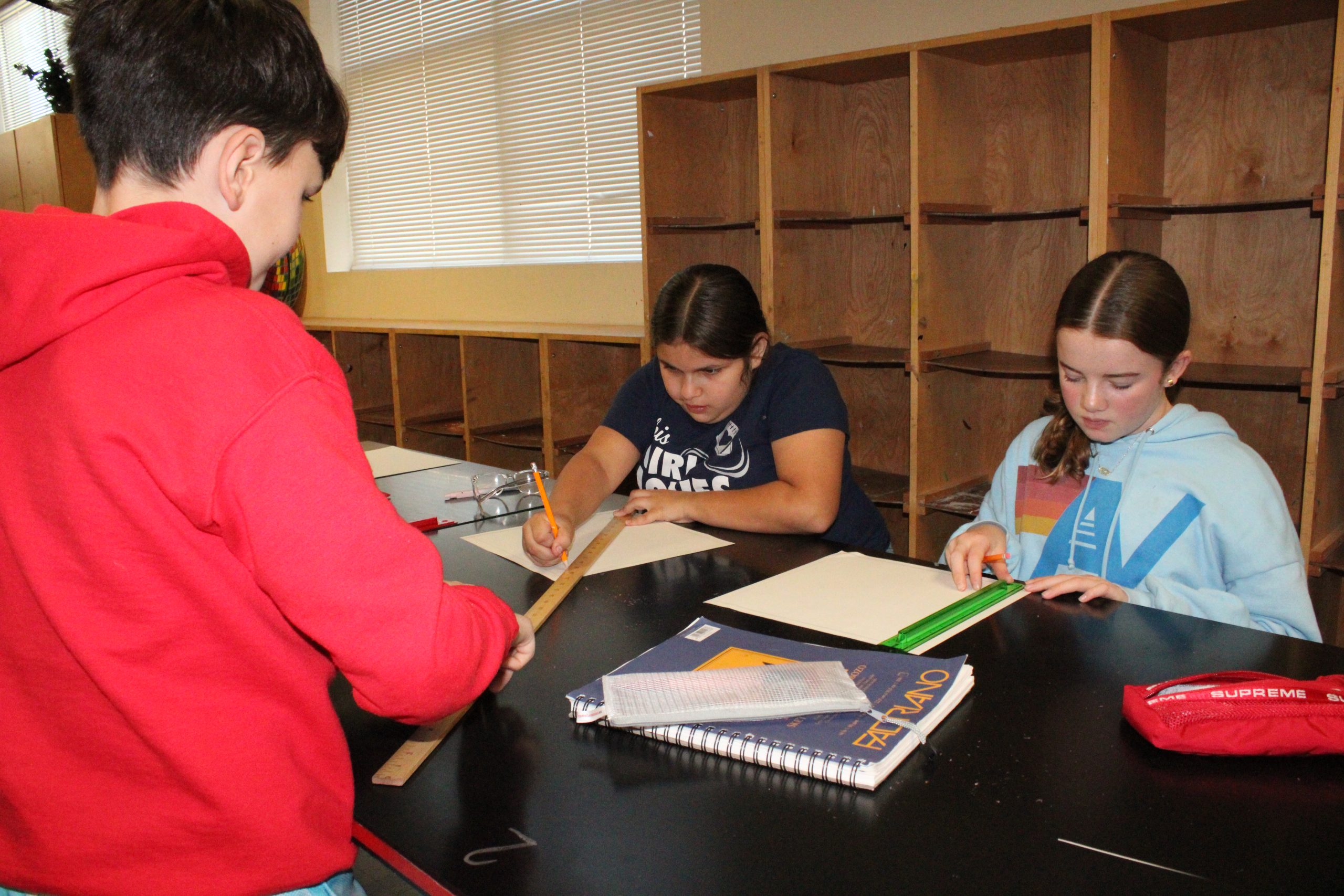
Tech theater allows you to express yourself through the things you create, just like in art. In art, students do not only draw—art provides a way for students to meet new people who also share their hobbies of drawing, painting, sculpting, and so much more.
Art is an elective that helps people “calm down from, like, the stress,” said Madge Hoermann, a 6th-grade art student at Alamo Heights Junior School. Art is a great place for students to share their perspective in an artistic way. It gives students a chance to “express your feelings on a canvas or paper,” states Madge. Art can be communicated in many different ways, like sketching, painting, and sculpting. Students find ways to communicate their thoughts visually.
Similarly, band allows students to be artistic, but instead of using colors and shapes, they use sound. Whether it is through a gentle flute or a deep tuba, each instrument provides a unique way for students to express themselves. “I really enjoy learning how to play the trumpet,” mentioned Max Guathier, an 8th-grade band student at Alamo Heights Junior School. In band, students have the freedom to choose their instrument during any of the three years they are at the Junior School.
Orchestra also gives students the chance to convey emotions through sound. While band focuses on brass, woodwinds, and percussion instruments, orchestra features strings. “I just love music, and getting to play my instrument every single day with a group of people that I really want to be around is just really special,” states Cooper Fordham, an 8th-grade violinist at Alamo Heights Junior School. When you’re in orchestra, you get close with every person you work with. “I think it’s just a fun way to get away from schoolwork,” mentions Cooper Fordham. Orchestra allows students to have a mental break from academics by practicing their instruments—whether it’s a violin, viola, cello, or double bass.
While most students use instruments to create music, students in choir use their voices. “I like choir because it’s really fun. I enjoy singing, there’s a lot of fun activities, and it’s almost like a second family,” says Gigi Gainey, an 8th-grade choir student at Alamo Heights Junior School. Although it may sound easy, it takes a lot of work to master. “The teachers are so welcoming, and there are a lot of opportunities no matter what,” mentions Gigi. Ms. Holliday gives the students lots of chances to shine, whether it’s choosing songs, doing fun singing activities, or playing warm-up games.
Another loved elective for 7th and 8th graders is peer tutoring. “Because peer tutor can help other students, teach them to treat everyone the same—even if they have a disability,” states Camille Foreman, an 8th-grade peer tutor at Alamo Heights Junior School. At school, all students can feel included, with or without a disability. Many students join peer tutoring to help out their friends. “I was motivated to join peer tutor by my best friend Cab,” mentions Camille. Students participate in peer tutoring to help others and make them feel like a part of the community.
Alamo Heights Junior School has an amazing elective program. There are so many options for students to explore and try new things. Whether you are creating artwork, making music, speaking foreign languages, or helping people with disabilities, Alamo Heights Junior School offers it all.



Leave a Reply